The Castle on the Hill Returns with Interiors by Jon de la Cruz
Dark for twenty years, Julius Castle is glowing again on Telegraph Hill. Interior Designer Jon de la Cruz made sure that when San Francisco walked back in, it would recognize the place.
- By
- California Homes Staff
- Date:
- November 18 2026
Some restaurants are places to eat. Julius Castle was a place to be seen — and, just as importantly, a place to see. Perched on Telegraph Hill with the Bay spread out beneath its windows, the turreted landmark drew celebrities and city notables from the 1950s through the 1980s, trading on dark wood, flickering candlelight and one of the most cinematic views in San Francisco.
Then, for two decades, the lights went out.
This fall they came back on. When Julius Castle reopened its reservation book, every table was gone in three minutes — a measure of how much the city had missed it, and a bright signal for a San Francisco dining scene that is very much on the rise again.
The revival began close to home. Owner Paul Scott lives on Telegraph Hill and was a longtime patron of the Castle in its heyday. He spent ten years working to bring it back, and he was clear from the start about what he did not want: a gut renovation that traded the building’s soul for something sleek and anonymous.
He found a like minded in interior designer Jon de la Cruz, founder of DLCID, whose work is known for weaving history together with an easy, modern livability. From their first meeting, the two agreed on the brief: honor the landmark’s storied past, and bring it thoughtfully into the present.
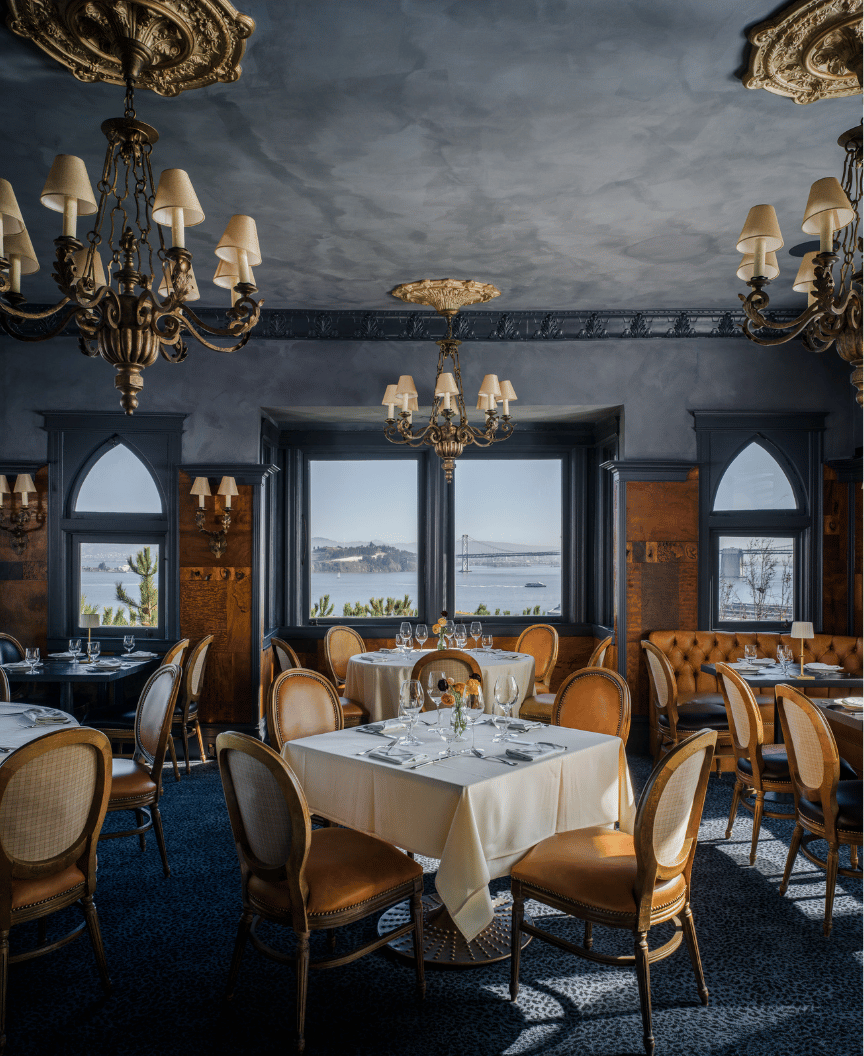
The sweeping views of the Bay, the dark wood paneling, and the candlelit chandeliers are the stars of the show.
— Jon de la Cruz
For de la Cruz, the guiding principle was restraint. Rather than imposing a new look, he set out to celebrate the architectural details that made the Castle beloved — and to quietly undo the decades of less sympathetic renovations that had piled up on top of them.
“The sweeping views of the Bay, the dark wood paneling, and the candlelit chandeliers are the stars of the show,” he says. “So every design decision was based on how to enhance those features, with new elements chosen to feel as though they had always belonged.”
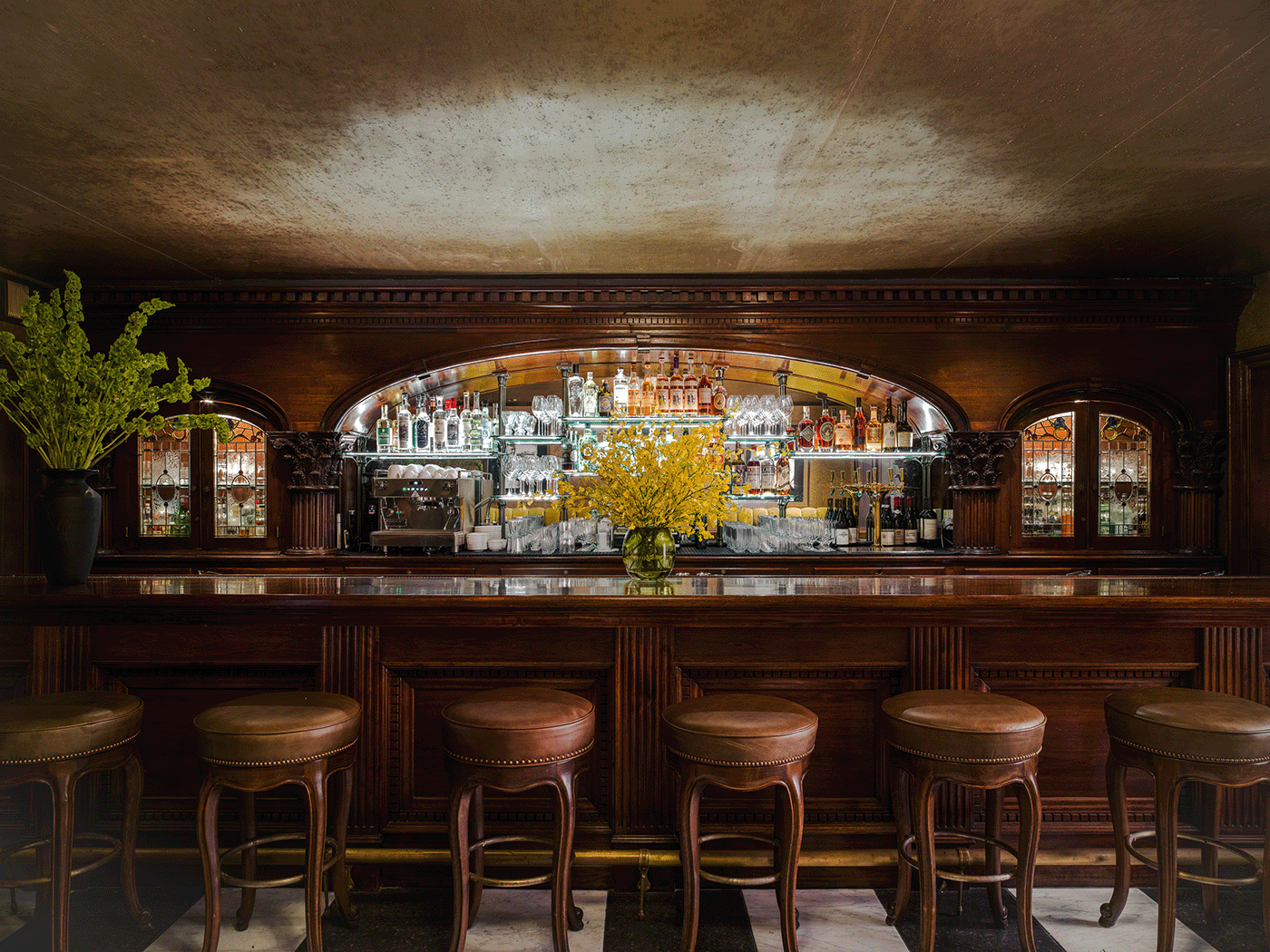
That meant starting overhead. The 1980s-era moldings came down, and the ceilings were replastered to restore the integrity of the original architecture. The Castle’s candle-arm chandeliers and sconces — the source of its famously low, atmospheric glow — were preserved and rewired rather than replaced, so the room still flickers the way regulars remember.
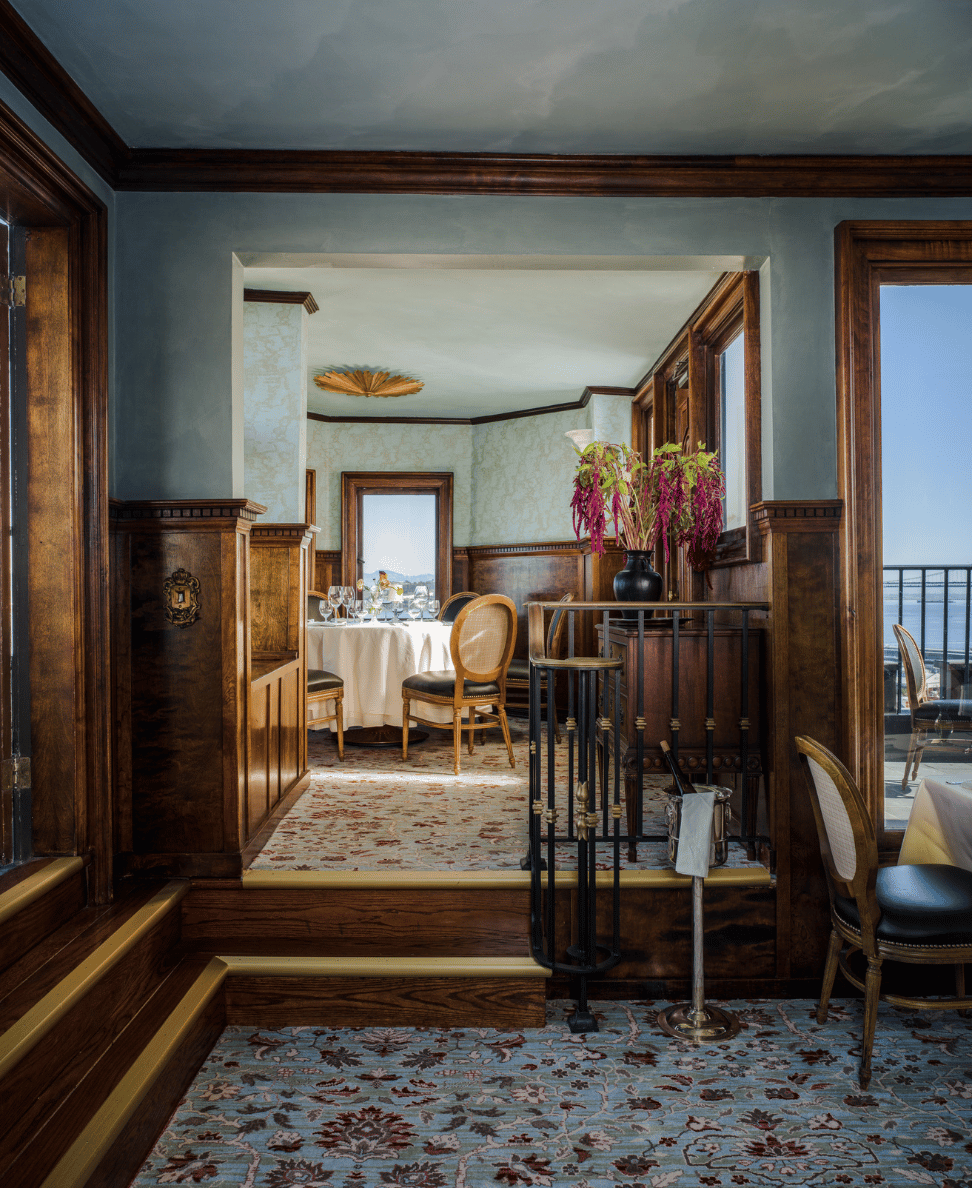
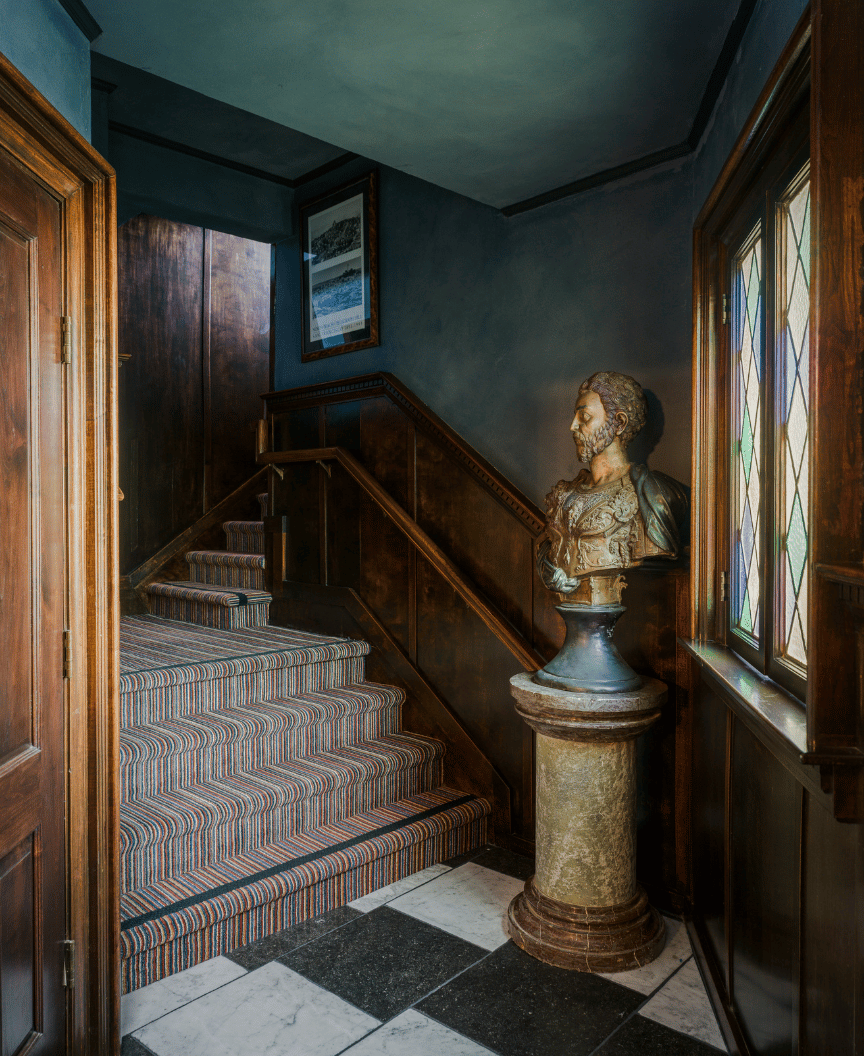
Underfoot, de la Cruz commissioned a custom Axminster carpet that reimagines a faded Persian motif in florals of soft blue, oxblood and burgundy. Against the paneled walls, it reads as warm and deeply settled — the kind of carpet that looks as if it has been there all along.
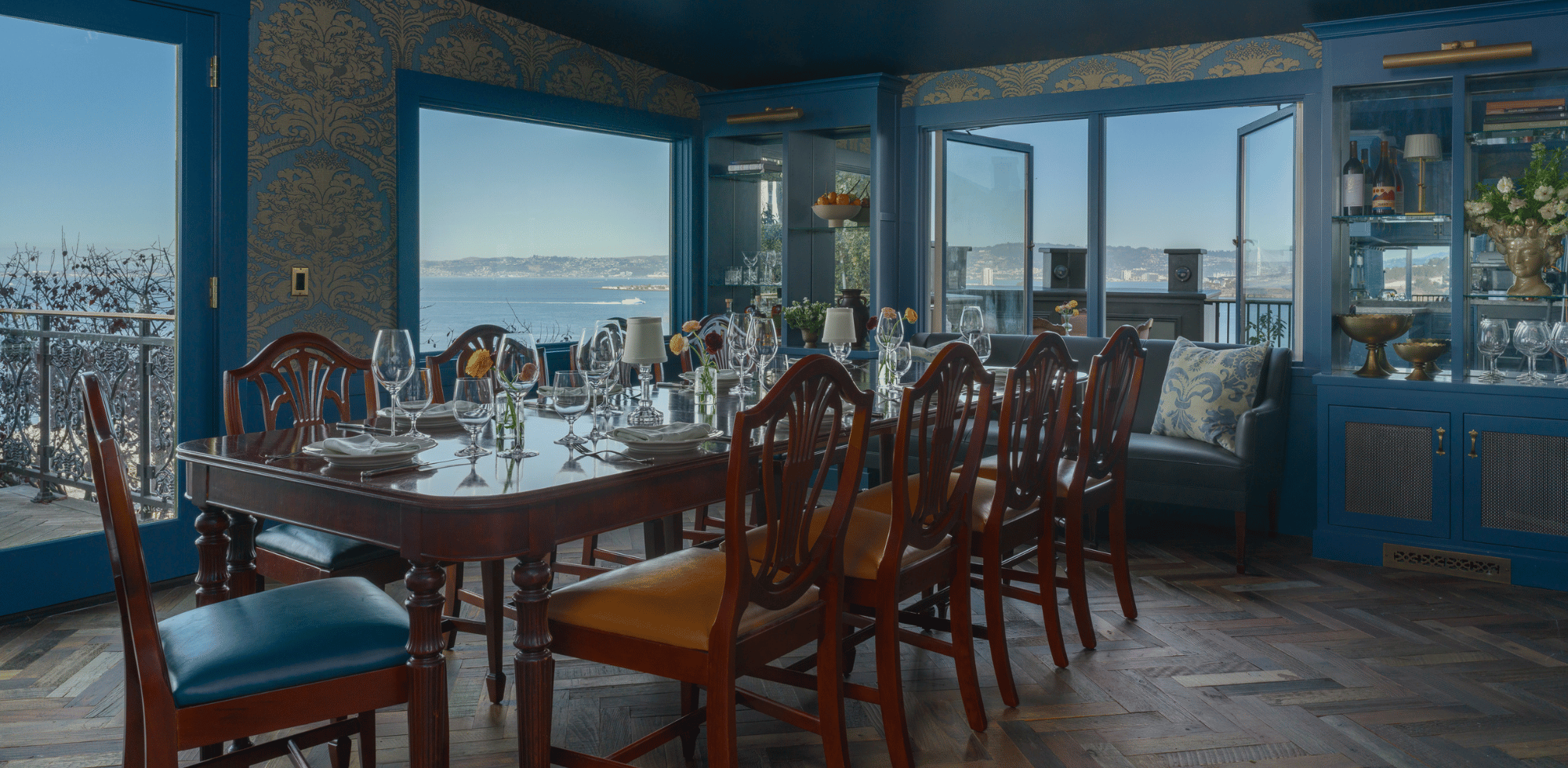
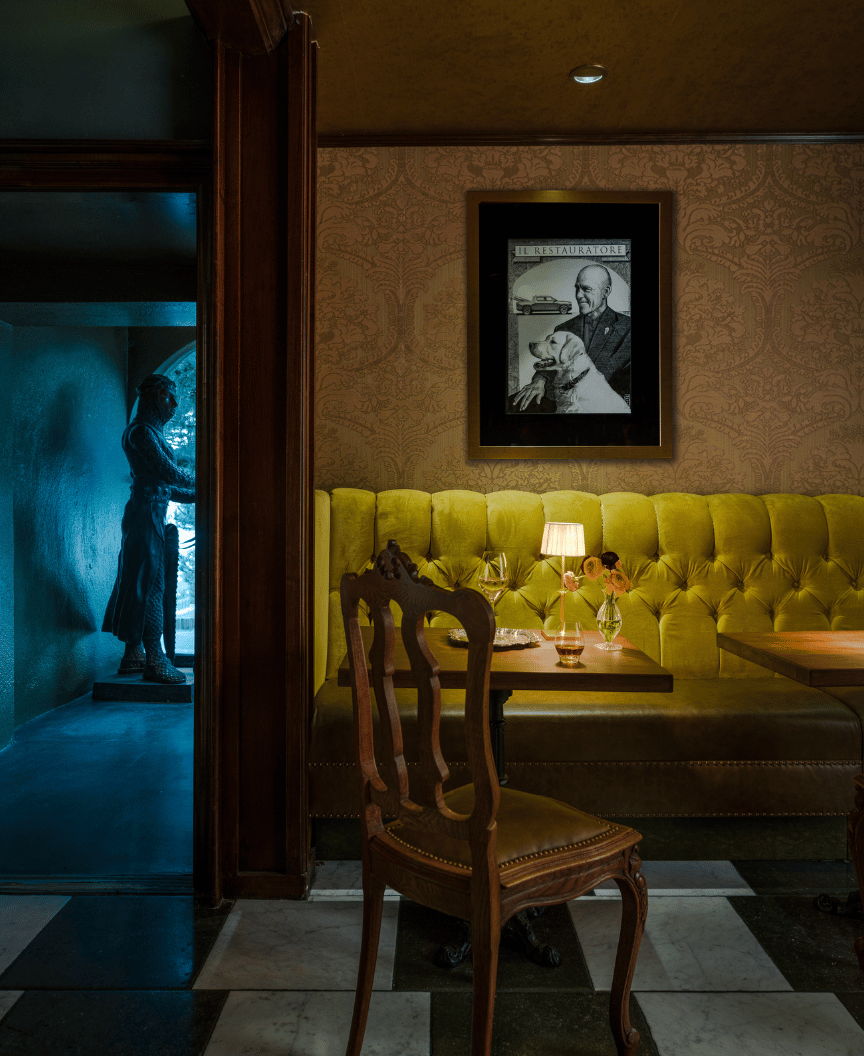
Along the main dining room’s window wall, cognac leather banquettes have been reupholstered with deep channel tufting, inviting guests to sink in and linger. And the tables themselves were placed with the view in mind, each one positioned to frame the waterfront. The most coveted seat in the house may well be the round table tucked into the main bay window, where the Bay fills nearly every sightline.
Not everything is old. Behind the scenes, an entirely new commercial kitchen brings modern function to the century-old building — invisible to diners, but essential to the Castle’s second act. At the rear, a freestanding space offers an intimate setting for private gatherings, giving the restaurant a room for celebrations of its own.
The success of the project is in what guests don’t notice. There is no jarring new statement, no sense of a brand laid over a legend. Instead, Julius’ Castle feels the way a beloved place should after a long absence: refreshed, polished and reassuringly familiar — still candlelit, still paneled in dark wood, and still looking out over the Bay as if it never left.